
Maryland bridges in Ireland
A Maryland bridge (also called a resin-bonded or winged bridge) replaces a single missing front tooth for €850 to €1,600 in Ireland — or €680 to €1,280 after 20% Form Med 2 tax relief. Instead of filing down the healthy teeth on either side for full crowns, a porcelain or zirconia tooth is held in place by a thin metal or ceramic wing bonded to the back of one neighbouring tooth.
When a Maryland winged bridge is the smartest way to replace a front tooth, how long it lasts, and why modern dentists use a single wing.
Free, no obligation. One registered dental clinic in your county replies, not five.
Calculate your dental bridge and 20% Med 2 tax relief
Pick the type of dental bridge, the ceramic or metal-porcelain material, and see your gross clinic fee alongside your net cost after 20% Form Med 2 tax relief.
Estimated cost guide
€840 to €1,280 after 20% relief
Clinic price: €1,050 to €1,600 · Form Med 2 refund: €210 to €320
Revenue explicitly lists all bridgework (enamel-retained Maryland bridges, tooth-supported fixed bridges and implant-supported bridges) as qualifying non-routine dental treatment on Form Med 2. On a Maryland resin-bonded winged bridge (replacing 1 front tooth with minimal tooth preparation) in all-ceramic zirconia / e-max (€1,050 to €1,600 at the clinic), claiming 20% back in Revenue myAccount brings your net cost to €840 to €1,280.
Ask a local clinic for a priceMaryland bridge vs traditional 3-unit bridge on a front tooth
| Feature | Maryland (resin-bonded winged) bridge | Traditional 3-unit fixed bridge |
|---|---|---|
| Cost in Ireland (gross) | €850 to €1,600 | €1,800 to €3,300 |
| Net cost after 20% Med 2 relief | €680 to €1,280 | €1,440 to €2,640 |
| Drilling of neighbouring teeth | None or minimal (0.3mm within back enamel only) — front of adjacent tooth is untouched | Heavy preparation — both neighbouring teeth are shaped down all the way round for crowns |
| Local anaesthetic needed? | Often not needed at all | Yes — full local anaesthetic required |
| Best tooth positions | Missing upper or lower lateral incisors, central incisors and occasionally first premolars | Molars, premolars, or front teeth where neighbours already have crowns or huge fillings |
| What happens if it debonds years later? | Can usually be cleaned, air-abraded and re-bonded without damage to the supporting tooth | If an abutment crown decays or fractures, the 3-unit bridge must be replaced |
Why modern Maryland bridges use one wing instead of two
Early Maryland bridges in the 1980s and 1990s had two metal wings bonded to the teeth on both sides of the gap. Clinical research later showed that because every natural tooth moves fractionally in its own direction when you bite, one of the two wings would eventually flex loose while the other held fast — letting plaque trap underneath the loose wing.
Today, Irish prosthodontists and restorative dentists almost always design a Maryland bridge as a single-wing cantilever bonded to one strong adjacent tooth (for example, bonding a replacement lateral incisor onto the back of the strong central incisor or canine) using Panavia resin cement. That allows the tooth to move naturally and dramatically increases survival rates (85% to 90%+ at 10 years).
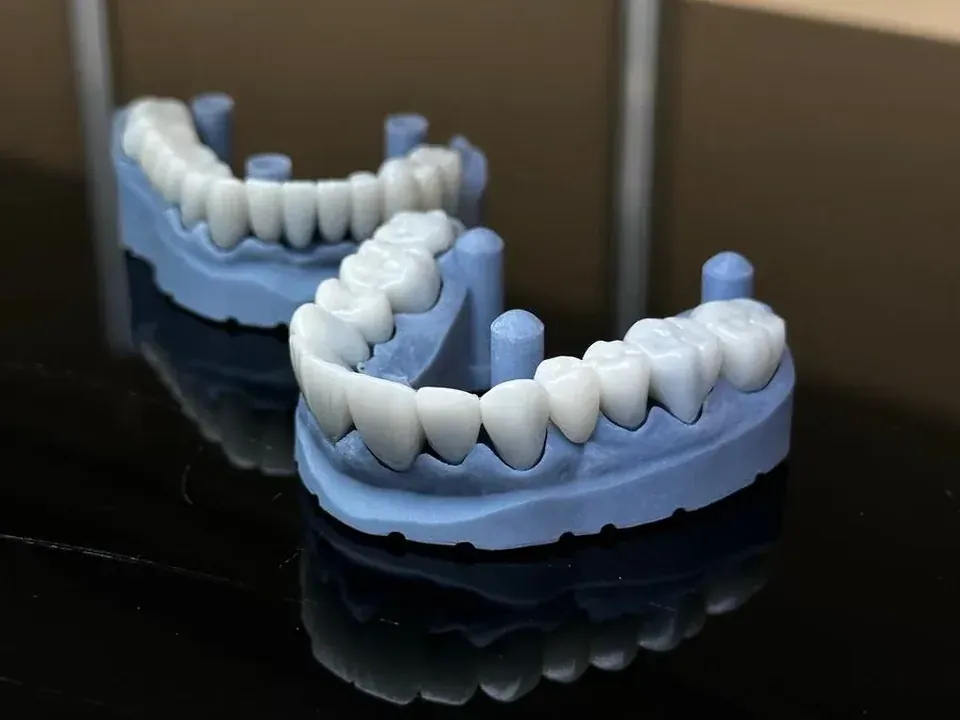
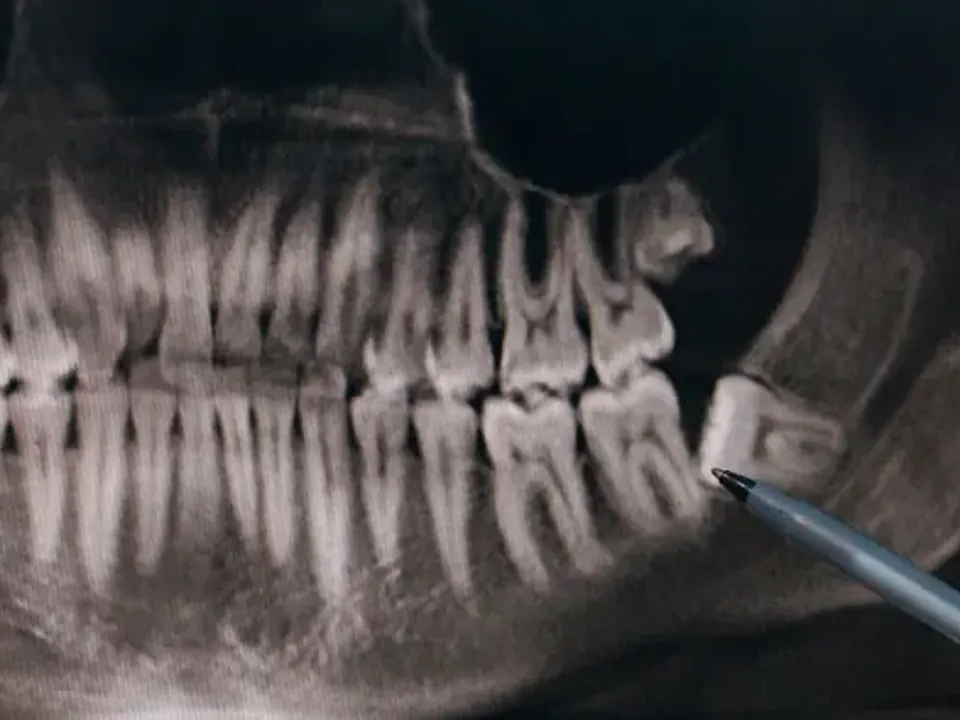
Real examples and installation detail
Get a dental bridge price from one local clinic
Pick the bridge type, where things stand and your county. Your enquiry goes to one Dental Council-registered dental clinic covering your county to arrange an X-ray and written treatment plan.
Dental bridges guides & price breakdowns
Straight answers to what people ask most: itemised costs, specifications, planning or grants, and what to check before you book.
More guides & resources: All guides & calculator hub · Technical & trade glossary · Frequently asked questions · All areas covered · About this site
Questions patients ask
Does the metal wing on a Maryland bridge show through my front tooth?
On very thin, translucent front teeth, a silver cobalt-chrome wing can sometimes cast a faint greyish shadow. To avoid that, dentists either use an opaque masking resin cement or make the wing from high-strength white zirconia ceramic instead of metal.
Does a Maryland bridge qualify for 20% Form Med 2 tax relief?
Yes. Revenue's Form Med 2 explicitly states 'Bridgework (enamel-retained or tooth-supported)', which covers Maryland resin-bonded bridges in full for 20% tax relief.
Dental bridges across all 26 counties
Requests from all 26 counties go to one vetted local specialist who covers your county — from Dublin, Cork, Galway and Limerick to Kildare, Meath, Wicklow, Waterford and Donegal. Pick your county below for local prices, specifications and advice. Compare all areas covered →
Want a written price for a dental bridge?
One Dental Council-registered clinic covering your county contacts you. Nothing is booked until you have an X-ray and a written treatment plan.