
Dental bridge vs dental implant in Ireland
Replacing a single missing tooth with a 3-unit fixed bridge costs €1,800 to €3,300 (€1,440 to €2,640 after 20% Med 2 tax relief) and is finished in 2 to 3 weeks without surgery. A single dental implant and crown costs €2,000 to €2,800 (€1,600 to €2,240 after 20% Med 2 relief), leaves neighbouring teeth untouched and preserves jawbone, but takes 3 to 6 months to heal.
How to decide between a fixed bridge, a single titanium implant and a removable partial denture.
Free, no obligation. One registered dental clinic in your county replies, not five.
Calculate your dental bridge and 20% Med 2 tax relief
Pick the type of dental bridge, the ceramic or metal-porcelain material, and see your gross clinic fee alongside your net cost after 20% Form Med 2 tax relief.
Estimated cost guide
€1,680 to €2,640 after 20% relief
Clinic price: €2,100 to €3,300 · Form Med 2 refund: €420 to €660
Revenue explicitly lists all bridgework (enamel-retained Maryland bridges, tooth-supported fixed bridges and implant-supported bridges) as qualifying non-routine dental treatment on Form Med 2. On a 3-unit fixed bridge (replacing 1 missing tooth, anchored on 2 adjacent teeth) in all-ceramic zirconia / e-max (€2,100 to €3,300 at the clinic), claiming 20% back in Revenue myAccount brings your net cost to €1,680 to €2,640.
Ask a local clinic for a priceFixed bridge vs dental implant vs partial denture
| Comparison point | 3-unit fixed bridge | Single dental implant + crown | Removable partial denture |
|---|---|---|---|
| Gross clinic price | €1,800 to €3,300 (Maryland: €850 to €1,600) | €2,000 to €2,800 (+€350–€800 if bone graft needed) | €550 to €1,400 (acrylic to chrome) |
| Net after 20% Med 2 relief | €1,440 to €2,640 | €1,600 to €2,240 | Acrylic excluded; cast chrome often claimed |
| Total treatment time | 2 to 3 weeks (2 appointments) | 3 to 6+ months (surgery + bone integration) | 2 to 4 weeks |
| Surgery required? | No surgery — routine chairside prep | Yes — minor oral surgery to place implant screw | No surgery |
| Effect on adjacent teeth | Adjacent teeth are crowned (or winged for Maryland) | Zero — adjacent teeth are not touched | Metal or acrylic clasps rest on adjacent teeth |
| Effect on jawbone in gap | Bone beneath the false pontic slowly resorbs over years | Preserves jawbone by stimulating the bone when chewing | Accelerates gum and bone shrinkage |
| Fixed or removable? | Permanently cemented | Permanently fixed | Taken out at night for cleaning |
When a bridge beats an implant — and vice versa
- A 3-unit fixed bridge is usually the better choice when: the two teeth on either side of the gap already have heavy fillings, root canals or worn crowns (so crowning them as part of a bridge strengthens them at the same time); when there is not enough jawbone volume for an implant and you want to avoid sinus lifts or bone grafting; or when medical conditions (such as heavy smoking, uncontrolled diabetes or bisphosphonate medication) make implant surgery higher risk.
- A single dental implant is usually the better choice when: the teeth on both sides of the gap are virgin, unfilled enamel that would otherwise have to be drilled down for a traditional bridge, and you have healthy bone depth.
- A Maryland winged bridge is the ideal middle ground when: you are missing a front incisor between virgin teeth, or a teenager/young adult needs a fixed tooth while waiting for jaw growth to finish before an implant.
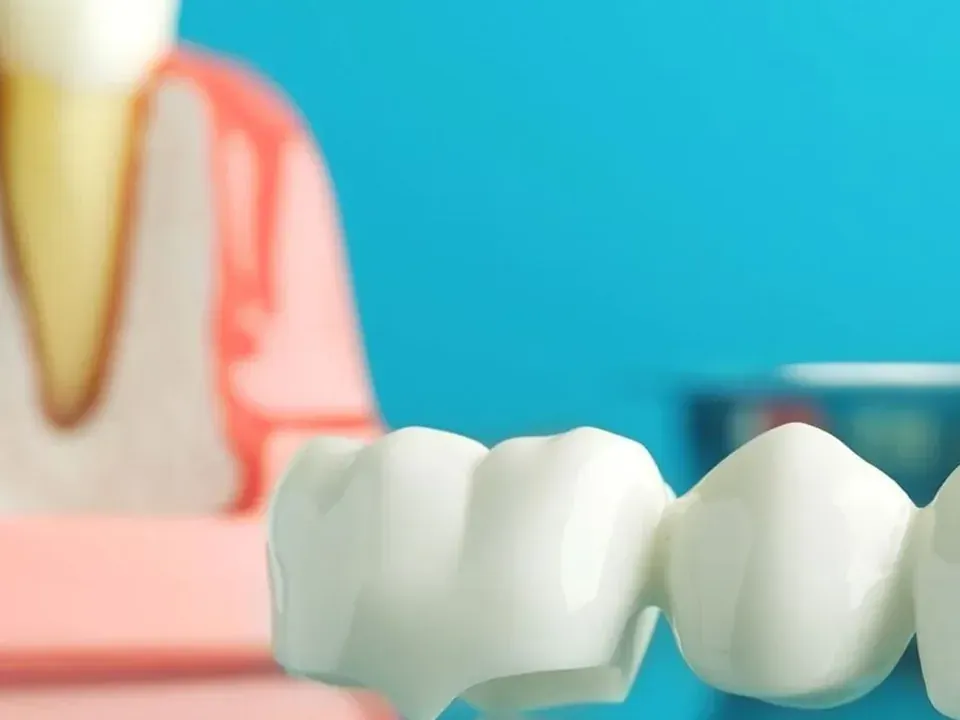
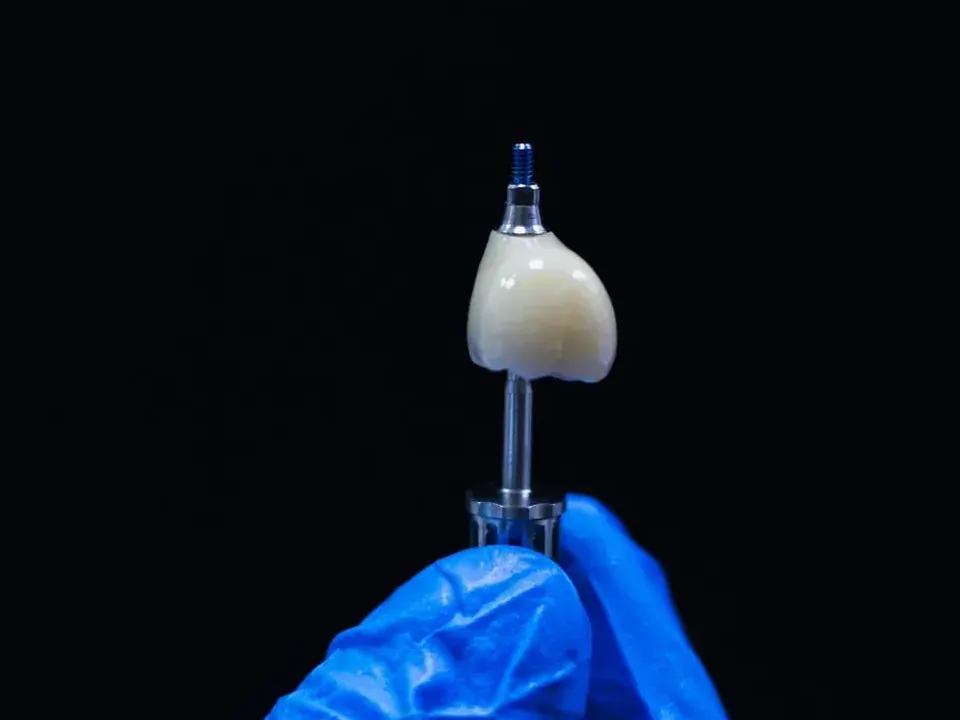
Real examples and installation detail
Get a dental bridge price from one local clinic
Pick the bridge type, where things stand and your county. Your enquiry goes to one Dental Council-registered dental clinic covering your county to arrange an X-ray and written treatment plan.
Dental bridges guides & price breakdowns
Straight answers to what people ask most: itemised costs, specifications, planning or grants, and what to check before you book.
More guides & resources: All guides & calculator hub · Technical & trade glossary · Frequently asked questions · All areas covered · About this site
Questions patients ask
Can I get a dental bridge now and switch to an implant in 10 years?
With a Maryland winged bridge, yes — because the adjacent teeth were not drilled down, the wing can be removed later if you ever choose an implant (though a small bone graft may be needed if the ridge has thinned). Once teeth are shaped down for a traditional 3-unit bridge, those teeth will always need crowns.
Do both dental bridges and dental implants qualify for 20% Form Med 2 tax relief?
Yes. Both bridgework and dental implants (including any bone grafting and the implant crown) qualify for 20% income tax relief on Revenue's Form Med 2.
Dental bridges across all 26 counties
Requests from all 26 counties go to one vetted local specialist who covers your county — from Dublin, Cork, Galway and Limerick to Kildare, Meath, Wicklow, Waterford and Donegal. Pick your county below for local prices, specifications and advice. Compare all areas covered →
Want a written price for a dental bridge?
One Dental Council-registered clinic covering your county contacts you. Nothing is booked until you have an X-ray and a written treatment plan.